About Tol-uene Chemical
Toluene's primary industrial uses are as a solvent in paints, lacquers, and glues, and as a key component in the production of other chemicals, including benzene . It is also used as a high-octane additive for gasoline, in the manufacturing of rubber and plastics, and in the printing and leather tanning industries. Solvent and thinner
- Paints, lacquers, and varnishes: Toluene is used to dissolve and thin these substances, helping with application and drying.
- Adhesives and glues: It acts as a solvent for glues and helps create adhesives and sealants.
- Cleaning agents: It is used to clean equipment and as a solvent in some cleaning products.
- Printing and leather tanning: Toluene is used in printing inks and in the processes of leather tanning.
- Personal care products: It is found in nail polish and nail polish removers to help dissolve resins and plasticizers and allow for smooth application.
Chemical feedstock
- Chemical manufacturing: It serves as a precursor for producing other chemicals, such as benzene, xylene, and toluene diisocyanate (TDI), which is used for polyurethane foam.
- Explosives: Toluene is a key ingredient in the synthesis of trinitrotoluene (TNT).
- Pharmaceuticals and dyes: It is used in the production of various pharmaceuticals, dyes, and other organic chemicals.
Fuel additive
- Gasoline: Toluene is added to gasoline to increase its octane rating, which improves engine performance by preventing knocking or pinging.
- Power generation: Its high energy content per unit of volume enhances power generation in vehicles.
Versatile Applications Across IndustriesToluene's exceptional solvency and chemical properties make it invaluable in various industrial sectors. It serves as a critical solvent for paints, coatings, and adhesives, enabling uniform application and improved performance. Additionally, it is widely used in chemical synthesis, laboratory settings, and as an octane enhancer in gasoline blends, ensuring efficient fuel combustion.
Safe Storage and Handling GuidelinesDue to its flammable and poisonous classification, Toluene requires careful handling. Store it in tightly sealed containers, in a cool, dry location with adequate ventilation, away from heat sources and ignition points. Following these protocols and using appropriate personal protective equipment can safeguard users and maintain product stability throughout its shelf life.
Environmental Precautions and StabilityWhile Toluene is stable under recommended storage conditions, it poses environmental hazards, particularly to aquatic life where it has persistent, long-lasting effects. Proper containment and disposal procedures must be followed to avoid environmental contamination. Its physical stability and chemical integrity are assured when stored correctly, supporting its reliable use over time.
FAQ's of Tol-uene Chemical:
Q: How should Toluene be safely stored and handled?
A: Toluene must be stored in tightly closed containers, positioned in a cool, dry, and well-ventilated area. Keep it away from direct heat, open flames, or any sources of ignition. Always wear appropriate personal protective equipment, such as gloves and goggles, when handling the chemical to prevent accidental exposure.
Q: What are the main industrial uses of Toluene?
A: Toluene is employed as a solvent in manufacturing paints, coatings, and adhesives, and serves as a chemical intermediate in various syntheses. It is also commonly used as a laboratory reagent and as an octane booster in gasoline to improve combustion efficiency.
Q: When is Toluene considered hazardous, and what precautions are necessary?
A: Toluene is classified as a flammable and poisonous liquid, with a flash point of 4C and an autoignition temperature of 535C. Adequate ventilation, fire prevention measures, and avoidance of ingestion or inhalation are essential. Always follow local regulations and safety guidelines during its use and storage.
Q: Where can Toluene be purchased and in what forms is it available?
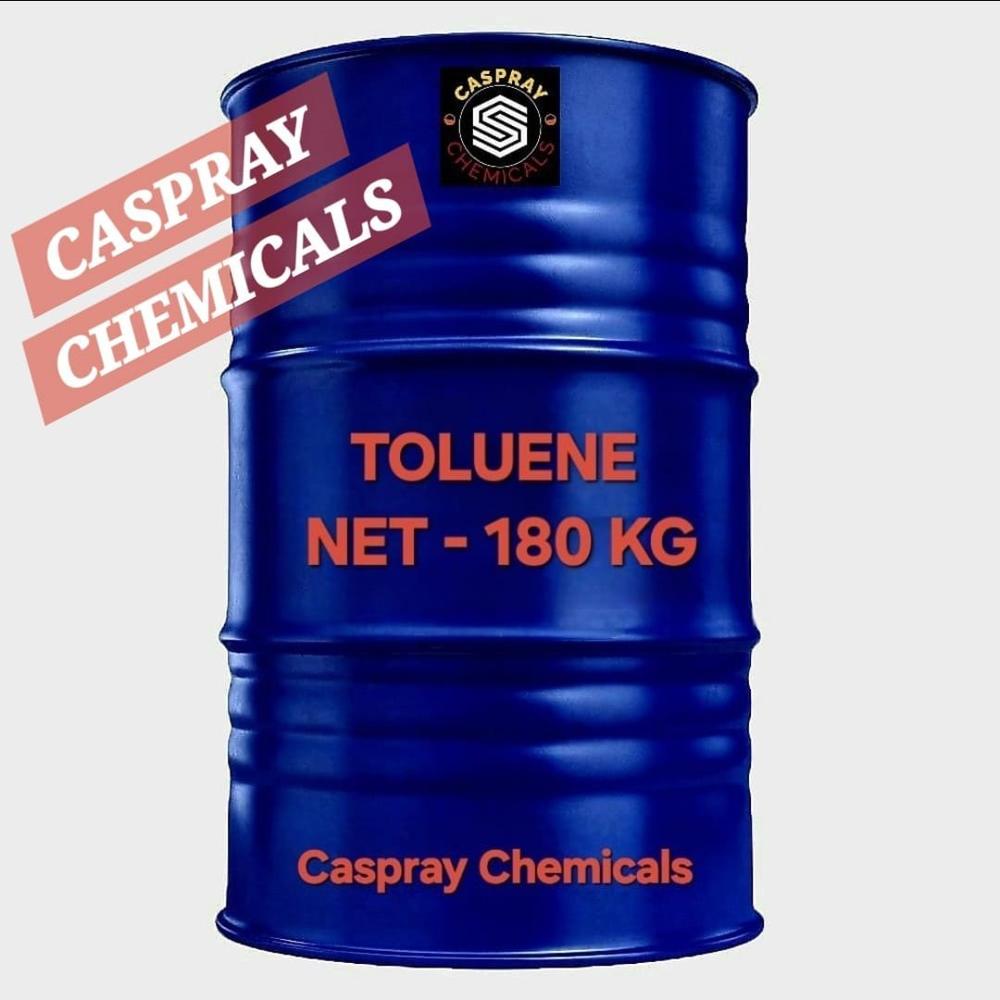
A: Toluene is supplied by various industrial chemical traders and suppliers across India. It is available in packaging options such as drums, barrels, and bulk tankers to meet different scale requirements.
Q: What is the process for disposing of Toluene safely?
A: Toluene waste must not be released into the environment. Dispose of it in accordance with local regulatory requirements-preferably via hazardous waste disposal facilities equipped to handle organic solvents. Containment measures should be in place to prevent leaks or spills during transit and disposal.
Q: Why is Toluene favored as a solvent in industrial applications?
A: Due to its excellent solvency power, Toluene dissolves a wide range of substances, facilitating efficient blending and uniform application in paints, adhesives, and other formulations. Its rapid evaporation rate and compatibility make it a preferred choice for many processes.

 Send Inquiry



 Send Inquiry

 Send Inquiry
 English
 Spanish
 French
 German
 Italian
 Chinese (Simplified)
 Japanese
 Korean
 Arabic
 Portuguese