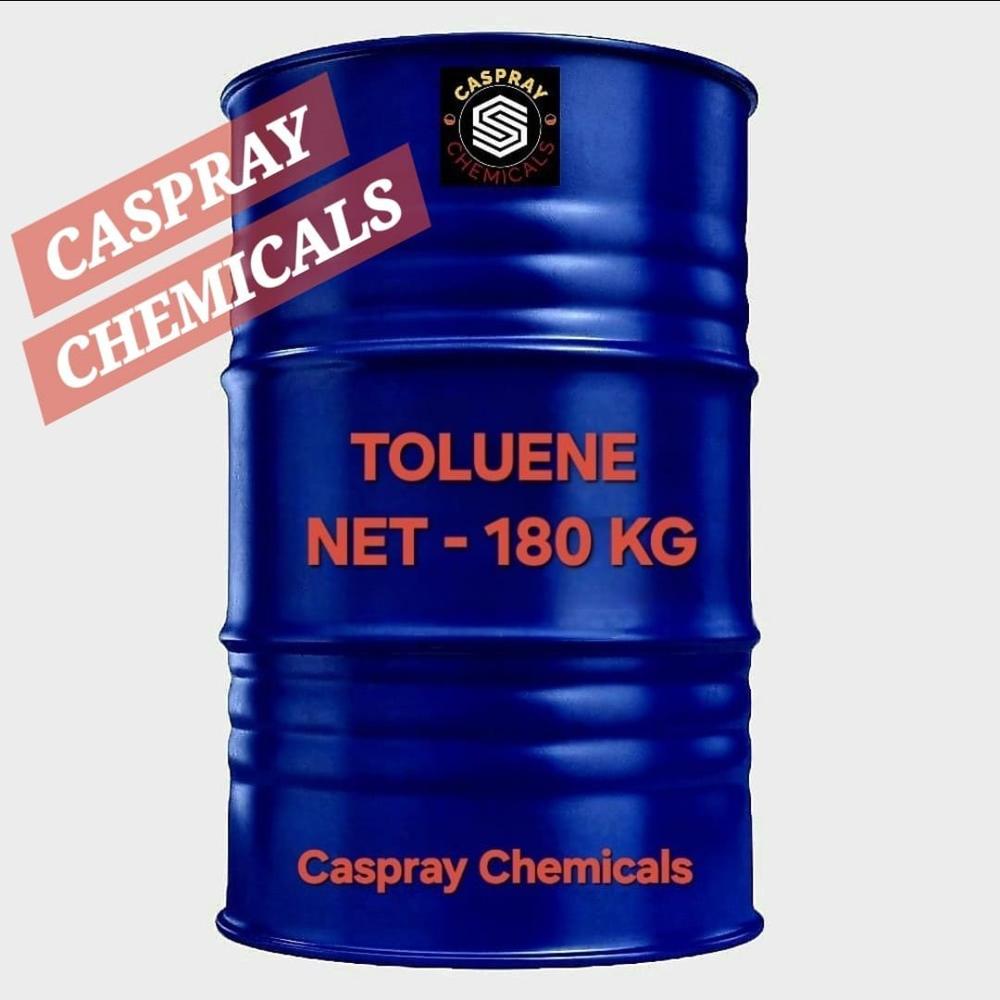
About Toluene
Toluene's primary industrial uses are as a solvent in paints, lacquers, and glues, and as a key component in the production of other chemicals, including benzene . It is also used as a high-octane additive for gasoline, in the manufacturing of rubber and plastics, and in the printing and leather tanning industries. Solvent and thinner
- Paints, lacquers, and varnishes: Toluene is used to dissolve and thin these substances, helping with application and drying.
- Adhesives and glues: It acts as a solvent for glues and helps create adhesives and sealants.
- Cleaning agents: It is used to clean equipment and as a solvent in some cleaning products.
- Printing and leather tanning: Toluene is used in printing inks and in the processes of leather tanning.
- Personal care products: It is found in nail polish and nail polish removers to help dissolve resins and plasticizers and allow for smooth application.
Chemical feedstock
- Chemical manufacturing: It serves as a precursor for producing other chemicals, such as benzene, xylene, and toluene diisocyanate (TDI), which is used for polyurethane foam.
- Explosives: Toluene is a key ingredient in the synthesis of trinitrotoluene (TNT).
- Pharmaceuticals and dyes: It is used in the production of various pharmaceuticals, dyes, and other organic chemicals.
Fuel additive
- Gasoline: Toluene is added to gasoline to increase its octane rating, which improves engine performance by preventing knocking or pinging.
- Power generation: Its high energy content per unit of volume enhances power generation in vehicles.
 Send Inquiry



 Send Inquiry

 Send Inquiry
 English
 Spanish
 French
 German
 Italian
 Chinese (Simplified)
 Japanese
 Korean
 Arabic
 Portuguese